
Why Seasonal Skincare Routines Matter Year-Round
Finding the right skincare routine can feel overwhelming when every season presents new challenges for your skin. Shifts in temperature, humidity, and sun exposure can leave skin dry in the winter, oily in the summer, or sensitive during transitions. Experts agree that adapting your products as the environment changes is key to maintaining healthy, balanced, and resilient skin. Discover how a seasonal skincare routine transforms your approach so your skin never has to play catch-up with the weather again.
Table of Contents
- What Are Seasonal Skincare Routines?
- How Climate Impacts Skin Health and Needs
- Adapting Products and Ingredients Each Season
- Common Mistakes in Routine Adjustments
- Long-Term Benefits of Seasonal Skincare
Key Takeaways
| Point | Details |
|---|---|
| Adapt Skincare Seasonally | Adjust your skincare routine to address specific seasonal challenges like dryness in winter and oiliness in summer. |
| Focus on Core Routine | Maintain a consistent foundation of cleanser, moisturizer, and sunscreen while incorporating seasonal adjustments. |
| Understand Climate Impact | Recognize how temperature, humidity, and pollution affect your skin’s needs and adapt your products accordingly. |
| Track Skin Responses | Monitor your skin’s reactions to seasonal changes to anticipate adjustments and prevent issues. |
What Are Seasonal Skincare Routines?
Seasonal skincare routines adapt your daily skincare regimen to match the specific environmental and climate challenges your skin faces throughout the year. Rather than using the same products year-round, this approach involves intentionally adjusting your skincare products and practices to address what your skin actually needs in each season.
Your skin doesn’t experience the same conditions in January as it does in July. The humidity levels, temperature fluctuations, UV intensity, and air quality all shift dramatically with the seasons. When environmental factors change, your skin’s needs change too. Seasonal skincare routines modify your regimen to manage winter dryness and sensitivity, summer oiliness and sun damage, and spring and fall transitional effects like allergies or fluctuating hydration.
How Seasonal Changes Affect Your Skin
Each season creates distinct challenges:
-
Winter: Cold air strips moisture, leaving skin tight, flaky, and irritated. Indoor heating compounds dehydration significantly.
-
Spring: Increased pollen triggers inflammation and sensitivity. Temperature swings confuse skin barrier function.
-
Summer: Heat boosts sebum production, humidity traps bacteria, and intense UV rays accelerate sun damage and hyperpigmentation.
-
Fall: Cooling temperatures drop humidity levels, and the transition stresses already-sensitized skin.
Your skin’s oil production, hydration levels, sensitivity, and barrier function fluctuate with these changes. A routine that works perfectly in fall may leave you greasy in summer or painfully dry in winter.
What Seasonal Skincare Actually Involves
Adapting seasonally doesn’t mean replacing your entire routine every three months. Instead, you make targeted adjustments:
-
Switch cleansers based on oil levels (lighter in summer, creamy in winter)
-
Adjust hydration products (layered hydrating serums in winter, lightweight hydrators in summer)
-
Modify actives and exfoliation frequency (gentler in sensitive seasons, more frequent in others)
-
Increase SPF consistency (year-round, but especially summer)
-
Add barrier-support products when needed (ceramides and oils in winter)
These adjustments keep your skin balanced across all four seasons. The goal is maintaining healthy, resilient skin regardless of external conditions.
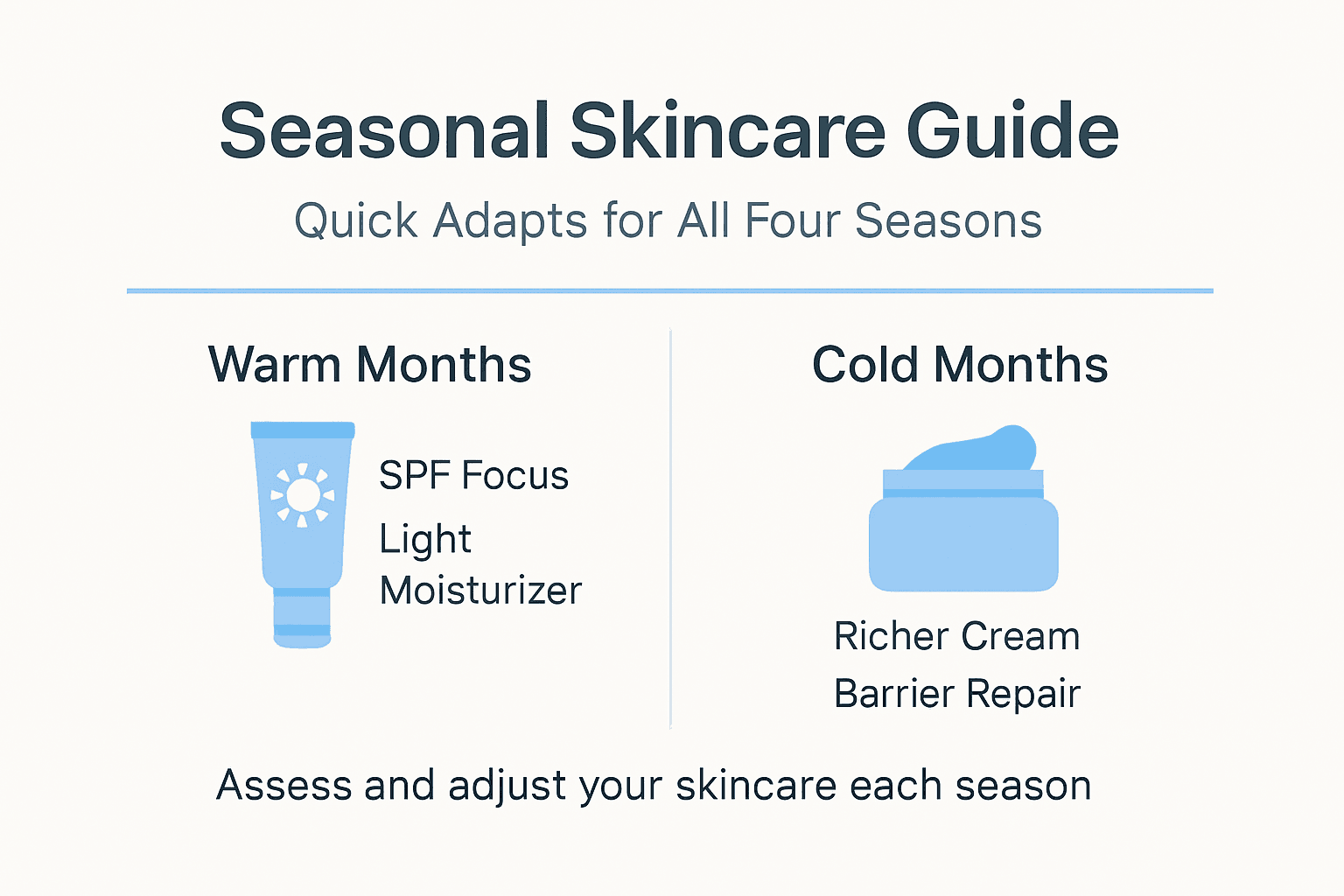
Here’s a quick reference comparing seasonal skincare priorities throughout the year:
| Season | Main Skin Challenges | Recommended Adjustments | Key Ingredients |
|---|---|---|---|
| Winter | Extreme dryness, sensitivity | Use richer moisturizers, add occlusives | Ceramides, oils, butters |
| Spring | Allergies, fluctuating hydration | Focus on barrier repair, gentle actives | Anti-inflammatories, hyaluronic acid |
| Summer | Oiliness, sun damage, breakouts | Switch to lighter products, increase SPF | Vitamin C, lightweight hydrators, SPF |
| Fall | Transition stress, dehydration | Layer hydration, prep for winter | Emollients, humectants, barrier support |
Seasonal adjustments work because skin responds differently to environmental factors year-round, and adapting products seasonally maintains skin health and prevents reactive damage.
Why Consistency Still Matters
While seasonal shifts are important, maintaining a consistent core routine foundation matters more than perfecting every seasonal transition. The foundation includes cleanser, moisturizer, and sunscreen you use reliably. Why consistency matters more than actives shapes long-term skin health more powerfully than chasing trending ingredients.
Seasonally adjusting within this consistent framework creates the sweet spot: reliable, foundational care plus environmental adaptation.
Pro tip: Start tracking your skin’s response to seasonal changes now—note when you experience dryness, oiliness, sensitivity, or breakouts. This baseline helps you anticipate and adjust before problems develop in upcoming seasons.
How Climate Impacts Skin Health and Needs
Climate shapes your skin’s daily reality. Temperature, humidity, air quality, and UV exposure directly influence how your skin functions, ages, and reacts to stress. Understanding these connections helps you anticipate what your skin needs and why seasonal adjustments matter so much.
Temperature and Humidity Effects
Warm weather increases blood flow to your skin’s surface, triggering more sebum production. This shifts your skin toward oiliness and congestion, especially if bacteria and humidity trap sweat in your pores. Cold weather pulls moisture from your skin faster, disrupting the lipid barrier and leaving skin tight and uncomfortable.

Humidity levels matter equally. High humidity keeps your skin hydrated externally but can trap bacteria and encourage breakouts. Low humidity accelerates water loss from your skin, intensifying dehydration and sensitivity.
These swings happen gradually, but your skin barrier struggles during transitions—which is why spring and fall often bring unexpected sensitivity.
Pollution and Environmental Stress
Environmental stressors like pollution increase oxidative stress and inflammation in skin tissue. Air pollution particles settle on your skin, triggering free radical damage that accelerates visible aging and disrupts barrier function.
Urban environments intensify this effect. Cities with higher traffic, industrial activity, or wildfire smoke expose your skin to constant oxidative assault. This stress ages skin faster and weakens its natural defense systems.
Rural and coastal areas face different challenges—salt air, pollen, and wind damage—but pollution stress affects all climates differently.
UV Radiation and Sun Damage
Ultraviolet radiation exposure varies dramatically by season, location, and time of day. Summer sun is intense, but winter UV rays still penetrate skin, especially at higher altitudes or near reflective surfaces like snow or water.
UV damage accelerates collagen breakdown, triggers inflammation, and creates hyperpigmentation. Over time, cumulative sun exposure drives premature aging and increases skin cancer risk. Your skin’s response to UV stress requires consistent, year-round protection.
How These Factors Work Together
Climate doesn’t affect your skin in isolation. Temperature, humidity, pollution, and UV exposure interact and compound each other:
-
Winter: Cold + low humidity + indoor heating = severe dehydration and barrier breakdown
-
Summer: Heat + high humidity + intense UV = increased sebum production, breakouts, and photodamage
-
Transition seasons: Fluctuating temperatures + shifting pollen levels = inflammation and unpredictable sensitivity
Your skin responds to the complete climate picture, not individual factors. This is why a single routine fails across seasons.
Below is a summary of how climate and environment work together to impact skin health:
| Environmental Factor | Skin Impact | Common Consequence | Effective Defense |
|---|---|---|---|
| Temperature | Alters oil and hydration levels | Dryness in cold, excess oil in heat | Adjust cleanser and moisturizer |
| Humidity | Changes water retention | Dehydration in low, congestion in high | Layer hydrating serums, lighten occlusives |
| Pollution | Increases oxidative stress | Premature aging, weakened barrier | Use antioxidants, cleanse thoroughly |
| UV Radiation | Damages collagen, increases pigmentation | Wrinkles, sunspots, cancer risk | Broad-spectrum SPF, daily application |
Climate directly affects your skin’s ability to maintain balance, and understanding these impacts helps you adjust your routine before problems develop.
Vulnerable Skin in Extreme Conditions
Extreme weather events increase risks of skin infections and injuries, and skin barrier damage from climate stress makes these conditions worse. People with sensitive skin conditions like atopic dermatitis or psoriasis experience flare-ups during seasonal transitions.
Climate-driven events—wildfires, flooding, extreme heat waves—create acute skin challenges that linger long after conditions return to normal.
Pro tip: Track your skin’s specific reactions to seasonal changes by noting which months bring dryness, oiliness, sensitivity, or breakouts, then prepare barrier-support products before those patterns return.
Adapting Products and Ingredients Each Season
Your skincare formula should shift with the seasons, not stay locked in place. The ingredients that feel perfect in winter can suffocate your skin in summer heat, while lightweight summer serums leave you dry and uncomfortable when cold weather arrives. Smart adaptation means matching your products and actives to what your skin actually needs right now.
Spring and Summer: Lightweight and Protective
Warm months demand lighter textures and different active ingredients. Heat increases sebum production, so heavy creams feel greasy and trap bacteria. Instead, focus on hydration without occlusion.
Lightweight moisturizers, hydrating serums with hyaluronic acid, and antioxidants like vitamin C combat sun damage and excess oil during spring and summer. These ingredients deliver hydration without creating a barrier that traps heat and sweat.
Ultraviolet protection becomes non-negotiable. Broad-spectrum SPF should be consistent year-round, but summer intensity requires religious daily application. Consider a dedicated sunscreen formulation designed for your skin type—oily skin benefits from lightweight, matte finishes.
Fall and Winter: Rich and Barrier-Supporting
Cold months flip your priorities. Your skin loses moisture faster, and indoor heating strips away hydration relentlessly. Heavier textures become your ally, not your enemy.
Shift toward:
-
Richer creams with nourishing oils and butters
-
Barrier-repair ingredients like ceramides and emollients
-
Hydrating serums layered under occlusive moisturizers
-
Gentler cleansers that don’t strip your skin’s natural oils
These ingredients rebuild and protect your skin barrier during months when it faces constant dehydration stress. Ceramides and fatty acids actually mirror your skin’s natural composition, making them especially effective for winter repair.
Understanding Ingredient Seasonality
Different actives work better in different seasons. Exfoliating acids and retinoids increase skin sensitivity to UV exposure, making them better suited for fall and winter when UV intensity drops. Summer demands protective antioxidants and hydrating ingredients that don’t compromise your barrier.
Sensitive skin conditions like rosacea or eczema often flare during seasonal transitions. Supporting your barrier with ceramides and anti-inflammatory ingredients prevents these flares before they start.
Making Your Transitions Smooth
Don’t swap your entire routine overnight. Instead, gradually introduce seasonal products over 1-2 weeks, allowing your skin to acclimate. This prevents shocking your skin with texture changes.
Seasonal ingredient shifts prevent reactive damage and keep your skin balanced year-round, not just surviving seasonal stress.
If you’re unsure which ingredients suit your specific skin type, understanding how to choose skincare ingredients naturally helps you build a seasonal rotation that actually works for your unique needs.
Start with your climate and current skin condition, then layer in seasonal actives that address what’s happening right now.
Pro tip: Before each season change, assess your current skincare and identify which products cause tightness, greasiness, or irritation—these are your candidates for seasonal swaps, not every single product in your routine.
Common Mistakes in Routine Adjustments
Good intentions often backfire when adapting seasonal routines. The most common pitfall? Not adapting at all. Many people use identical products year-round, expecting their skin to somehow adjust itself. Your skin doesn’t work that way. Understanding what goes wrong helps you avoid costly mistakes and keep your skin healthy through every season.
The “Set It and Forget It” Trap
Using the same skincare routine without seasonal adjustments is the foundational mistake. Your winter moisturizer feels perfect in January but becomes a suffocating layer in July heat. Your summer serum leaves you uncomfortably dry when fall arrives.
Common mistakes include using the same skincare routine year-round without adapting to seasonal changes, skipping sunscreen during colder months, and over-exfoliating in dry seasons. These missteps disrupt your skin’s balance and increase sensitivity, breakouts, and dryness.
Your skin isn’t static. It shifts with temperature, humidity, and UV exposure, so your routine must shift too.
Over-Exfoliating When Skin Is Already Compromised
Dry seasons tempt people to exfoliate harder, thinking they’ll remove dead skin and improve texture. The opposite happens. Over-exfoliating in winter strips your already-compromised barrier and triggers intense irritation.
Winter skin is already stressed from dehydration and cold. Adding aggressive exfoliation creates a perfect storm for sensitivity and inflammation. Dial back exfoliation frequency in cold months and save stronger treatments for fall and spring when your barrier is more resilient.
Layering and Product Selection Missteps
Incorrect product choices and poor layering habits cause serious problems:
-
Heavy moisturizers in summer: Creates clogged pores and traps sweat, fueling breakouts
-
Insufficient layering in winter: Leaves skin dry despite using products, because hydrating serums lack an occlusive seal
-
Neglecting sunscreen year-round: UV rays penetrate even in winter, especially at higher altitudes or near reflective surfaces
-
Wrong exfoliation frequency: Too frequent in sensitive seasons, too infrequent in others
Proper layering means applying hydrating serums to damp skin, then sealing them with occlusive moisturizers. In summer, lighter hydrators without heavy occlusion prevent congestion.
Neglecting Hydration When Humidity Drops
Low humidity in winter accelerates water loss from your skin. Many people respond by adding more occlusive creams, but forget to actually hydrate first. An occlusive without hydration underneath is like putting a lid on an empty cup—it doesn’t add moisture.
Include hydrating serums with humectants like hyaluronic acid or glycerin in your winter routine. Layer them before your occlusive moisturizer to actually trap moisture in your skin.
Seasonal skincare mistakes disrupt your skin barrier and trigger sensitivity, acne, or dryness that lingers for weeks after the mistake starts.
The Timing Trap
Improper product selection such as using heavy moisturizers in summer leads to clogged pores, while not layering adequately during winter causes dryness. Sudden full-routine swaps also shock your skin. Gradual transitions over 1-2 weeks allow your skin to acclimate without reactive flare-ups.
Start introducing seasonal products slowly, replacing one product at a time. This lets you identify what actually works for your skin versus what causes problems.
Pro tip: Test one new seasonal product for 3-5 days before adding another—this isolates which products help or hurt your skin, preventing confusion when multiple changes happen at once.
Long-Term Benefits of Seasonal Skincare
Seasonal skincare isn’t a short-term trend or seasonal luxury. It’s an investment in your skin’s long-term health that compounds over months and years. When you adapt your routine intentionally, your skin responds with visible improvements that extend far beyond any single season.
Supporting Skin Barrier Integrity
Your skin barrier is your first line of defense against environmental damage. Long-term adherence to seasonally adjusted skincare routines supports skin barrier integrity and reduces premature aging caused by environmental exposure. A strong barrier means your skin can actually retain moisture, defend against pollution, and recover from stress.
Consistent seasonal adjustments prevent the constant damage-repair cycles that happen when you use mismatched products. Winter support strengthens your barrier when it’s vulnerable. Summer protection shields it from UV stress. Over time, your barrier becomes genuinely resilient instead of perpetually compromised.
Preventing Chronic Skin Issues
Many skin problems develop from seasonal neglect. Chronic dryness, persistent oiliness, recurring sensitivity, and seasonal breakouts all stem from refusing to adapt your routine. People suffer through dry winters and greasy summers, assuming it’s just their skin type.
It’s not. Your skin type shifts seasonally. Seasonal skincare provides sustained benefits including balanced moisture levels and reduced irritation, plus prevention of seasonal flare-ups like dryness in winter or excess oiliness in summer. Over months and years, consistent seasonal care prevents these problems from developing into chronic conditions.
Slowing Visible Aging
Premature aging accelerates when your skin faces constant environmental stress without appropriate support. UV damage compounds yearly. Pollution-triggered inflammation builds up. Dehydration stress in winter creates texture changes that worsen over time.
Seasons adjustments address these specific stressors with targeted support:
-
Summer protection: Consistent broad-spectrum SPF and antioxidants prevent cumulative UV damage
-
Winter support: Barrier-repair ingredients and hydration prevent dehydration-driven aging
-
Transition care: Anti-inflammatory support prevents sensitivity that accelerates aging
This sustained approach delays visible wrinkles, texture changes, and age spots far more effectively than any single product could.
Building Lasting Skin Resilience
Over years of seasonal adjustments, your skin becomes genuinely resilient. Your barrier strengthens. Your moisture balance stabilizes. Environmental stressors that once triggered breakouts or sensitivity become manageable.
This resilience is the real payoff. You’re not just reacting to seasonal challenges—you’re building a skin system that weathers them naturally.
Seasonal skincare compounds over years, turning reactive damage prevention into genuine, lasting skin health and visible radiance.
Maintaining Results Long-Term
One-time skincare efforts fade quickly. Seasonal routines sustain results because they continuously adapt to your skin’s evolving needs. The consistency means visible improvements compound—clearer skin, smoother texture, fewer breakouts, less sensitivity.
By maintaining appropriate support year-round, you avoid the frustrating cycle of great skin in one season and damaged skin in another.
Pro tip: Document your skin’s appearance and condition every three months with the same lighting and time of day—comparing photos across a year reveals long-term improvements that daily observation misses, keeping you motivated to maintain seasonal adjustments.
Embrace Year-Round Radiance with Seasonal Skincare Solutions
Seasonal skincare routines matter because your skin’s needs evolve with temperature, humidity, and environmental stress. If you struggle with dry winter skin, oily summer breakouts, or sensitivity during seasonal transitions, a carefully tailored approach can transform your skin health and resilience. Passé Daisy® understands these challenges and offers meticulously crafted, cruelty-free products designed to adapt to your skin’s changing needs throughout the year.
Discover how luxury meets efficacy as you explore our collection at Passé Daisy. Experience lightweight hydrators for summer, rich barrier-supporting creams for winter, and antioxidant-rich serums that protect and restore your skin. Take control of your seasonal skincare now and build lasting radiance and confidence no matter the climate. Start your journey to balanced, radiant skin today at Passé Daisy and learn more about why consistency matters more than actives for true skin health year-round.
Frequently Asked Questions
What are seasonal skincare routines?
Seasonal skincare routines are customized skincare regimens that adapt to the specific environmental challenges your skin faces throughout the year, addressing changing issues like dryness in winter or oiliness in summer.
How do seasonal changes affect my skin?
Each season presents unique challenges: winter causes dryness and sensitivity, spring brings allergies, summer intensifies oiliness and sun damage, and fall creates transitional stress and dehydration, all of which affect your skin’s needs.
What adjustments should I make to my skincare routine in summer?
In summer, switch to lighter cleansers and moisturizers, increase your use of SPF, and incorporate antioxidants to combat sun damage while ensuring your skin remains hydrated without feeling greasy.
Why is consistency important in a seasonal skincare routine?
While adapting your routine to seasonal changes is crucial, maintaining a consistent core regimen with essential products—like cleanser, moisturizer, and sunscreen—ensures long-term skin health and resilience against fluctuating environmental factors.
Recommended
Let customers speak for us
Their packaging is adorable and I’m literally obsessed with their vitamin c moisturizer.
One of my faves! Not too heavy & leaves my skin glowy/bright. The consistency wears perfect under makeup.

Absolutely love this serum! After a few weeks of consistent use, my lashes became longer and fuller, and my brows look much healthier. It’s gentle, easy to apply, and actually delivers visible results. Highly recommend! 💛
Absolutely love this serum! After a few weeks of consistent use, my lashes became longer and fuller, and my brows look much healthier. It’s gentle, easy to apply, and actually delivers visible results. Highly recommend! 💛

I’ve really enjoyed using this serum. It was easy to incorporate into my routine, and my lashes look healthier and fuller. I’m very happy with the results and would recommend it!
I absolutely LOVE this serum! After having a terrible accident with an eyelash curler that ripped out a huge chunk of my lashes, this stuff truly helped grow my lashes back longer and fuller! It is also does not irritate my eyes at all which is a huge plus! Totally worth it!

I’ve been using this serum for a little bit over a week and I have nothing but good things to say. There has been no irritation to my eyelids upon application and after, and I see a change in the fullness of my lashes already. I highly recommend.
I’ve been really enjoying this lash serum! It’s lightweight, easy to apply, and has become such a simple part of my nightly routine. I also love that it doesn’t feel sticky or heavy after application. The packaging is beautiful, and the overall experience feels really luxurious. I’m excited to keep using it and can’t wait to see even more results over time. Definitely recommend if you’re looking to support healthier-looking lashes!
I’ve been really enjoying this lash serum! It’s lightweight, easy to apply, and has become such a simple part of my nightly routine. I also love that it doesn’t feel sticky or heavy after application. The packaging is beautiful, and the overall experience feels really luxurious. I’m excited to keep using it and can’t wait to see even more results over time. Definitely recommend if you’re looking to support healthier-looking lashes!
I am absolutely in love with the Celestial Age-Defy Peptide Serum! Finding an anti-aging product that actually delivers visible results can be a challenge, but this serum is incredible. After just two weeks of using it morning and evening, I can already see a wonderful difference. My skin feels noticeably smoother, firmer, and deeply hydrated. It does an amazing job at softening fine lines and giving the skin a healthy, youthful glow. The texture is lightweight, absorbs beautifully, and leaves the skin feeling great. Highly recommend!

I’ve been using the Multi Peptide Eyelash Serum as part of my routine, and one of the things I like most is that it’s prostaglandin-free, vegan, and cruelty-free. The applicator is very precise, making it easy to apply to both my lashes and brows. So far, I’ve really enjoyed using it and I’m looking forward to seeing my results with continued use. Overall, it’s been a great addition to my beauty routine.
Just started using this serum and I cannot say enough good things about it. It’s so easy to add to my daily routine and really helps extenuate my natural features. Will be purchasing again!! 5 stars easy!!