
What is peptide serum? Benefits and cruelty-free guide
Many believe peptide serums erase wrinkles instantly, but visible results require weeks due to skin biology. This article explains what peptide serums are, how they work, and why cruelty-free options matter. You will learn to confidently choose effective peptide serums for healthier skin.
Table of Contents
- Introduction To Peptide Serums
- How Peptide Serums Work On Skin
- Benefits Of Using Peptide Serums
- Common Misconceptions About Peptide Serums
- Comparison Of Different Peptide Types In Skincare
- Cruelty-Free Considerations In Peptide Serums
- Practical Use, Selection, And Integration Into Routine
- Explore Cruelty-Free Peptide Skincare At Passé Daisy
- Frequently Asked Questions About Peptide Serums
Key takeaways
| Point | Details |
|---|---|
| Peptide serums stimulate collagen production | They improve elasticity and reduce wrinkles over 6 to 12 weeks of consistent use. |
| Different peptide types serve unique functions | Signal peptides boost collagen, carrier peptides deliver nutrients, and enzyme inhibitors reduce inflammation. |
| Cruelty-free peptide serums are equally effective | Ethical options align with your values without sacrificing skin benefits. |
| Consistency and product selection matter most | Choose serums with clinically studied peptides and use them twice daily for best results. |
Introduction to peptide serums
Peptides are short chains of amino acids acting as signaling molecules in skin. Think of them as messengers that tell your skin cells what to do. When applied topically, they communicate with fibroblasts to trigger collagen production and repair processes.
Serums are lightweight, highly concentrated formulations designed for better absorption than other products. Their thin consistency allows active ingredients like peptides to penetrate deeper into skin layers where they can work effectively.
Rising interest in peptide serums stems from growing evidence of their anti-aging and skin repair benefits. Clinical studies have validated their ability to improve skin texture, reduce wrinkles, and enhance elasticity. Understanding basic definitions lays the foundation for appreciating how peptide serums work.
Peptide serums typically contain:
- Short amino acid chains (2 to 50 amino acids long)
- Water-based or gel formulations for rapid absorption
- Supporting ingredients like hyaluronic acid and antioxidants
- Concentrations ranging from 1% to 10% depending on peptide type
How peptide serums work on skin
Peptides stimulate fibroblasts which produce collagen, improving skin elasticity and reducing wrinkles. Fibroblasts are specialized cells in the dermis responsible for creating structural proteins. When peptides bind to receptors on these cells, they trigger increased collagen and elastin synthesis.
Their small molecular size (2 to 50 amino acids) allows better penetration through the skin than larger proteins. This size advantage means peptides can reach the dermis where collagen production occurs. Larger proteins like collagen itself cannot penetrate effectively, which is why topical peptides offer superior results.
Different peptides signal biological actions like collagen synthesis and skin repair. Some peptides mimic natural fragments of collagen breakdown, tricking skin into producing more to compensate. Others block enzymes that degrade existing collagen, preserving what you already have.
Consistency is critical because collagen production and skin cell turnover take weeks. New collagen fibers need time to form and integrate into your skin structure. Most people see noticeable improvements after 8 to 12 weeks of twice-daily application.
Key mechanisms include:
- Receptor activation on fibroblast cell membranes
- Upregulation of collagen and elastin gene expression
- Enhanced wound healing and tissue repair signals
- Inhibition of collagen-degrading enzymes
Pro Tip: Choosing serums with peptides validated by clinical studies optimizes skin benefits. Look for ingredients like palmitoyl pentapeptide-4 (Matrixyl) or copper peptides that have published research backing their efficacy. Understanding what is a serum skincare helps you make informed choices about formulation quality.
Benefits of using peptide serums
Peptide serums optimized with palmitoyl pentapeptide-4 have demonstrated visible wrinkle reduction by up to 45% after consistent use. This dramatic improvement occurs because signal peptides boost collagen production at the cellular level. Studies measured wrinkle depth using standardized imaging techniques before and after 12 weeks of application.
They improve skin elasticity and hydration with documented measurable effects. Users report firmer, more supple skin as collagen networks strengthen. Peptides also enhance the skin barrier, reducing transepidermal water loss and keeping moisture locked in.
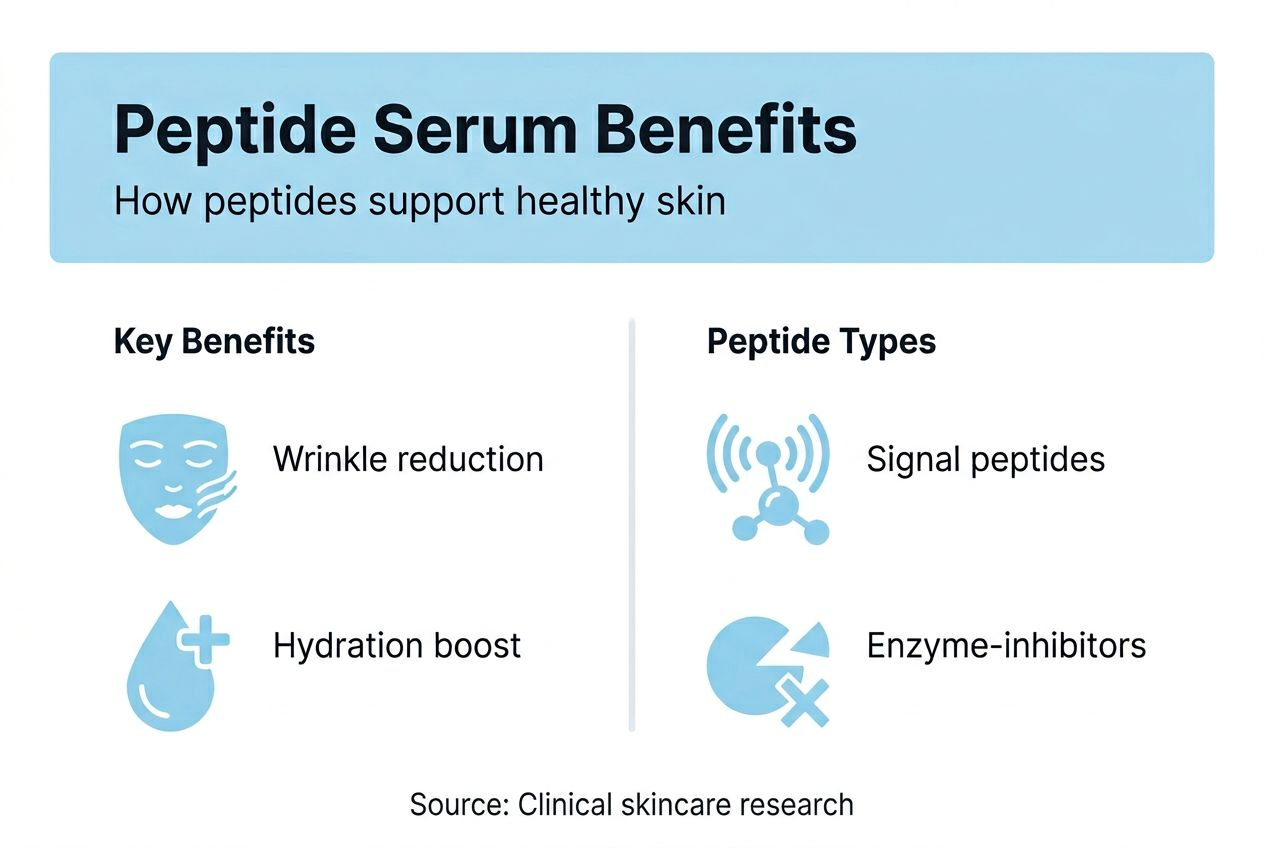
Compared to retinoids, peptides cause fewer skin irritation reactions (5% vs 20 to 30%). This makes peptides suitable for sensitive skin seeking effective anti-aging. Retinoids can cause redness, peeling, and photosensitivity, while peptides typically integrate smoothly into routines.
Key benefits include:
- Reduction in fine lines and wrinkles within 8 to 12 weeks
- Improved skin firmness and elasticity measurements
- Enhanced hydration and barrier function
- Minimal irritation risk for most skin types
- Compatibility with other active ingredients
Peptide serums reduce wrinkle depth by up to 45% after 12 weeks of consistent twice-daily use with clinically studied peptides.
The Celestial Age-Defy Peptide Serum combines multiple peptide types with vegan ingredients to deliver these benefits while maintaining cruelty-free standards. This dual approach addresses both efficacy and ethical concerns.
Common misconceptions about peptide serums
-
Peptide serums produce immediate results. Visible changes take 6 to 12 weeks due to skin cell turnover. Collagen synthesis is a biological process that cannot be rushed. New collagen fibers must form, mature, and integrate into your skin structure before you see texture improvements.
-
All peptides work the same way. Different types have distinct effects. Signal peptides stimulate collagen, carrier peptides transport minerals, and enzyme-inhibiting peptides prevent breakdown. Each serves a unique role in skin health.
-
Peptides are too large to penetrate skin. Peptides penetrate skin effectively despite misconceptions about size. Their molecular weight (500 to 3000 Daltons) falls within the ideal range for transdermal absorption. Unlike whole proteins, peptides can pass through the stratum corneum.
-
More expensive peptide serums are always better. Price does not guarantee efficacy. What matters is peptide type, concentration, formulation quality, and supporting ingredients. A well-formulated affordable serum can outperform a luxury product with poor ingredient selection.
-
You can skip other skincare steps if using peptides. Peptides work best as part of a complete routine. They need hydration from moisturizers and protection from sunscreen to maximize benefits. Cleansing prepares skin for peptide absorption.
Understanding these helps set realistic expectations and improves product selection. You will avoid disappointment and choose serums that truly deliver on their promises.
Comparison of different peptide types in skincare
Signal peptides stimulate collagen synthesis, key for anti-aging. They send messages to fibroblasts to ramp up production of structural proteins. Popular examples include palmitoyl pentapeptide-4 (Matrixyl) and palmitoyl tripeptide-1. These peptides mimic collagen fragments to trick skin into repair mode.
Carrier peptides enhance active delivery and nutrient transport to skin cells. Copper peptides are the most well-known carrier type. They bind copper ions and deliver them deep into skin where they activate enzymes involved in collagen production and wound healing.
Enzyme-inhibiting peptides reduce inflammation and prevent collagen breakdown. They work by blocking matrix metalloproteinases (MMPs), enzymes that degrade collagen and elastin. This preservation approach complements the production boost from signal peptides.
Choosing serums with the right mix of peptide types optimizes skin repair and appearance. A formula combining signal and enzyme-inhibiting peptides addresses both production and preservation. This dual action yields better results than single-peptide products.
| Peptide Type | Primary Function | Best For | Example Ingredients |
|---|---|---|---|
| Signal Peptides | Stimulate collagen production | Wrinkles, fine lines, firmness | Matrixyl, Palmitoyl Tripeptide-1 |
| Carrier Peptides | Deliver minerals and nutrients | Wound healing, overall repair | Copper Peptides (GHK-Cu) |
| Enzyme-Inhibiting Peptides | Prevent collagen breakdown | Sensitive skin, inflammation | Soy Peptides, Rice Peptides |
Key considerations:
- Signal peptides deliver the most dramatic anti-aging effects
- Carrier peptides support overall skin health and healing
- Enzyme-inhibiting peptides offer gentler results with less irritation
- Combination formulas provide comprehensive benefits
Pro Tip: Sensitive skin benefits most from enzyme-inhibiting peptides due to reduced irritation risk. Start with a serum focused on these gentler peptides before adding signal peptides. The Celestial Age-Defy Peptide Serum balances multiple peptide types for broad benefits without overwhelming sensitive skin. Comparative studies confirm peptides cause fewer irritation reactions than many alternatives.
Cruelty-free considerations in peptide serums
84% of US consumers prefer cruelty-free skincare aligning ethical values with product choice. This overwhelming majority wants effective skincare without animal testing or animal-derived ingredients. The demand has pushed brands to seek ethical alternatives that perform equally well.
Certification bodies like Leaping Bunny ensure no animal testing or ingredients in peptide serums. These organizations audit supply chains and manufacturing processes. A Leaping Bunny logo guarantees the brand commits to cruelty-free practices at every stage.
Cruelty-free peptides do not sacrifice efficacy. Ethical products perform well in collagen stimulation and skin repair. Synthetic and plant-based peptides deliver the same molecular signals as any peptide. The source does not affect how fibroblasts respond.
Checking labels and certifications can help identify credible cruelty-free peptide serums. Look for:
- Leaping Bunny or PETA certification logos
- Vegan formulation claims (no animal-derived ingredients)
- Transparent ingredient sourcing information
- Brand statements about testing policies
Many effective peptides are synthesized in laboratories, making them inherently cruelty-free. Biotechnology allows creation of pure peptides without animal sources. This innovation aligns scientific advancement with ethical values, giving you powerful skincare options that respect your principles.
Practical use, selection, and integration into routine
Choose serums with clinically studied peptides and verified cruelty-free certifications. Read ingredient labels carefully to confirm the presence of effective peptides like Matrixyl or copper peptides. Check for third-party certification logos from Leaping Bunny or PETA.
Apply peptides after cleansing and toning, before moisturizers, twice daily for best absorption. Your skin should be clean and slightly damp when you apply serum. Use 2 to 3 drops and press gently into face and neck. Wait 60 seconds before layering moisturizer.
Patience is key. Expect visible benefits after 8 to 12 weeks of consistent use. Mark your calendar to track progress with monthly photos. This timeline aligns with natural skin cell turnover cycles.
Combine peptides with hydrating ingredients like hyaluronic acid for enhanced skin barrier support. Peptides work best in a moisturized environment. Hyaluronic acid plumps skin and helps peptides penetrate more effectively. The Celestial Age-Defy Peptide Serum includes hydrating ingredients alongside peptides for comprehensive benefits.
Step-by-step integration:
- Cleanse face with a gentle cleanser suited to your skin type
- Apply toner or essence if part of your routine
- Dispense peptide serum and press into skin (morning and evening)
- Wait 60 seconds for absorption
- Apply moisturizer to seal in benefits
- Use sunscreen every morning (peptides do not cause photosensitivity but protection maximizes results)
Additional tips:
- Patch test new peptide serums on your inner arm for 24 hours
- Store serums in cool, dark places to preserve peptide stability
- Avoid mixing peptides with highly acidic products (pH below 3) which can degrade them
- Layer peptide serum with antioxidant serums for enhanced protection
Pro Tip: Patch test new peptide serums to avoid irritation and ensure compatibility. Apply a small amount behind your ear or on your inner forearm. Wait 24 hours to check for redness or itching before using on your face.
Tips on reading ingredient labels to confirm absence of animal-derived components include checking for common non-vegan ingredients like collagen (often from fish or bovine sources), lanolin (from sheep wool), or carmine (from insects). Synthetic peptides clearly labeled with chemical names are typically vegan. Learn how to use serums for healthy skin to maximize your results. Pair your peptide serum with Feels Like Silk Peptide Moisturizer to lock in hydration and amplify anti-aging benefits.
Explore cruelty-free peptide skincare at Passé Daisy
You now understand how peptides transform skin through collagen stimulation and repair. Passé Daisy offers scientifically formulated cruelty-free peptide serums and moisturizers to support healthier, youthful skin. Every product reflects meticulous testing and ethical ingredient sourcing.
Try the Celestial Age-Defy Peptide Serum for targeted wrinkle reduction with vegan ingredients. This formula combines signal and enzyme-inhibiting peptides to address both collagen production and preservation. Complement your routine with Feels Like Silk Peptide Moisturizer for lasting hydration. The moisturizer seals in serum benefits while delivering its own peptide boost. Explore the full range at Passé Daisy to align skincare with your ethical values and skin goals. Every product combines efficacy with elegance, giving you visible results you can feel good about.
Frequently asked questions about peptide serums
What is the typical timeline to see results from a peptide serum?
Visible improvements appear after 8 to 12 weeks of consistent twice-daily use. This timeline matches natural skin cell turnover cycles and collagen production rates. Some users notice subtle texture improvements around week 4 to 6.
Can peptide serums cause skin irritation for sensitive skin?
Peptide serums rarely cause irritation, with reaction rates around 5% compared to 20 to 30% for retinoids. Enzyme-inhibiting peptides are especially gentle for sensitive skin. Always patch test new products and start with once-daily application if you have reactive skin.
How can I identify if a peptide serum is truly cruelty-free?
Look for Leaping Bunny or PETA certification logos on packaging or brand websites. Check ingredient lists for animal-derived components like collagen from fish or lanolin from sheep. Reputable brands clearly state their cruelty-free commitment and provide transparent sourcing information.
Are peptide serums suitable to use with other skincare actives?
Yes, peptides layer well with most actives including vitamin C, niacinamide, and hyaluronic acid. Avoid using peptides immediately after highly acidic products (pH below 3) as acids can degrade peptide structure. Apply peptides before heavier creams but after toners.
Do all peptide serums work the same way on skin?
No, different peptide types serve distinct functions. Signal peptides boost collagen production, carrier peptides deliver nutrients, and enzyme-inhibiting peptides prevent breakdown. Serums with multiple peptide types provide broader benefits than single-peptide formulas.
Recommended
Let customers speak for us
Their packaging is adorable and I’m literally obsessed with their vitamin c moisturizer.
One of my faves! Not too heavy & leaves my skin glowy/bright. The consistency wears perfect under makeup.

Absolutely love this serum! After a few weeks of consistent use, my lashes became longer and fuller, and my brows look much healthier. It’s gentle, easy to apply, and actually delivers visible results. Highly recommend! 💛
Absolutely love this serum! After a few weeks of consistent use, my lashes became longer and fuller, and my brows look much healthier. It’s gentle, easy to apply, and actually delivers visible results. Highly recommend! 💛

I’ve really enjoyed using this serum. It was easy to incorporate into my routine, and my lashes look healthier and fuller. I’m very happy with the results and would recommend it!
I absolutely LOVE this serum! After having a terrible accident with an eyelash curler that ripped out a huge chunk of my lashes, this stuff truly helped grow my lashes back longer and fuller! It is also does not irritate my eyes at all which is a huge plus! Totally worth it!
Love it so much!
Such a luxe serum! I love using this and have noticed great results

I’ve been using this serum for a little bit over a week and I have nothing but good things to say. There has been no irritation to my eyelids upon application and after, and I see a change in the fullness of my lashes already. I highly recommend.
I’ve been really enjoying this lash serum! It’s lightweight, easy to apply, and has become such a simple part of my nightly routine. I also love that it doesn’t feel sticky or heavy after application. The packaging is beautiful, and the overall experience feels really luxurious. I’m excited to keep using it and can’t wait to see even more results over time. Definitely recommend if you’re looking to support healthier-looking lashes!
I’ve been really enjoying this lash serum! It’s lightweight, easy to apply, and has become such a simple part of my nightly routine. I also love that it doesn’t feel sticky or heavy after application. The packaging is beautiful, and the overall experience feels really luxurious. I’m excited to keep using it and can’t wait to see even more results over time. Definitely recommend if you’re looking to support healthier-looking lashes!
I am absolutely in love with the Celestial Age-Defy Peptide Serum! Finding an anti-aging product that actually delivers visible results can be a challenge, but this serum is incredible. After just two weeks of using it morning and evening, I can already see a wonderful difference. My skin feels noticeably smoother, firmer, and deeply hydrated. It does an amazing job at softening fine lines and giving the skin a healthy, youthful glow. The texture is lightweight, absorbs beautifully, and leaves the skin feeling great. Highly recommend!

I’ve been using the Multi Peptide Eyelash Serum as part of my routine, and one of the things I like most is that it’s prostaglandin-free, vegan, and cruelty-free. The applicator is very precise, making it easy to apply to both my lashes and brows. So far, I’ve really enjoyed using it and I’m looking forward to seeing my results with continued use. Overall, it’s been a great addition to my beauty routine.
Cannot say enough amazing things about Passé Daisy and their team!
Just started using this serum and I cannot say enough good things about it. It’s so easy to add to my daily routine and really helps extenuate my natural features. Will be purchasing again!! 5 stars easy!!