
Why Use Cruelty-Free Skincare: Beauty With Ethics
Finding trustworthy cruelty-free skincare can feel like navigating a maze of confusing labels and bold claims. For women who value both compassion and results, the search for authentic, ethical options is crucial. With more brands offering high-performance cruelty-free formulations and certifications from groups like Leaping Bunny or PETA’s Beauty Without Bunnies, you can confidently choose products that match your values. Discover how cruelty-free skincare delivers real effectiveness without compromise.
Table of Contents
- Cruelty-Free Skincare Defined And Common Myths
- Key Distinctions: Cruelty-Free Versus Other Labels
- Innovative Testing: Safer Alternatives For Skin
- Personal, Ethical, And Global Benefits Explained
- Risks, Mislabeling, And How To Choose Wisely
Key Takeaways
| Point | Details |
|---|---|
| Understanding Cruelty-Free | Cruelty-free skincare products are not tested on animals at any stage of development, backed by recognized certifications. |
| Innovative Testing Methods | New methodologies like In Silico Modeling and Human Cell Culture Systems are transforming safety testing to avoid animal cruelty. |
| Informed Consumer Choices | Shoppers must research brands and look for recognized certification logos to ensure products are genuinely cruelty-free. |
| Impact of Ethical Choices | Choosing cruelty-free skincare not only supports animal welfare but also promotes environmental sustainability and ethical consumerism. |
Cruelty-Free Skincare Defined And Common Myths
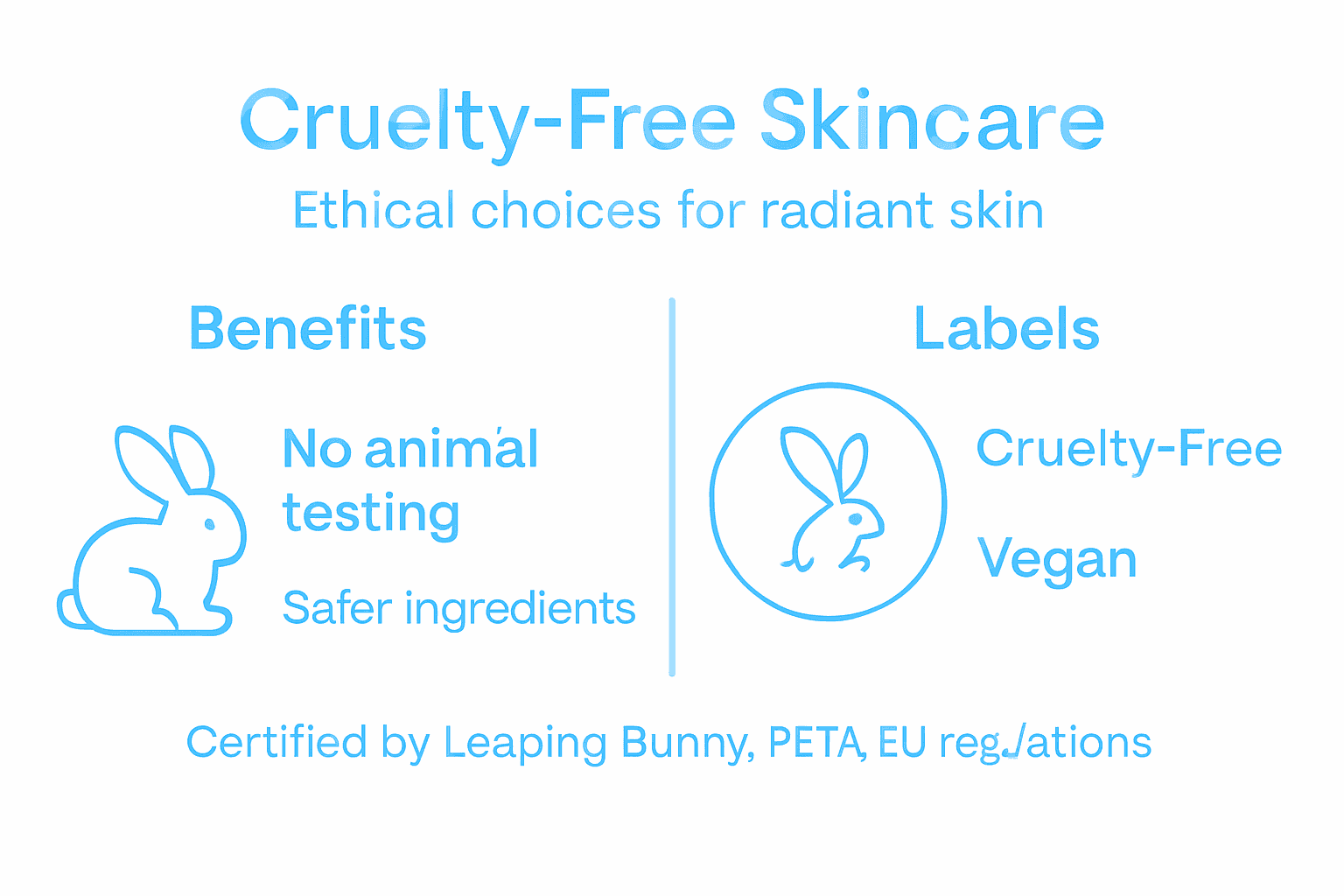
In the evolving landscape of beauty and personal care, cruelty-free skincare represents a significant ethical stance. Cruelty-free cosmetics are products that have not been tested on animals during any stage of product development, research, or manufacturing.
Understanding what constitutes cruelty-free skincare requires examining several key characteristics:
- No Animal Testing: Products are developed without subjecting animals to painful or harmful experiments
- Certification from Recognized Organizations: Verified by groups like Leaping Bunny, PETA’s Beauty Without Bunnies, and Choose Cruelty Free
- Comprehensive Production Standards: Covers entire product lifecycle, from ingredient sourcing to final formulation
Many consumers mistakenly believe that cruelty-free products compromise performance or availability. However, modern brands are proving these myths incorrect. Contemporary cruelty-free skincare lines offer sophisticated, high-performance formulations that rival traditional cosmetic products.
Cruelty-free skincare is not just an ethical choice, but a commitment to innovative and compassionate beauty practices.
Consumer demand has significantly transformed the skincare market, with an increasing number of brands adopting cruelty-free standards. These companies demonstrate that ethical practices and exceptional skincare can coexist seamlessly.
Pro tip: When shopping for cruelty-free products, always look for recognized certification logos from reputable animal welfare organizations to ensure authentic claims.
Key Distinctions: Cruelty-Free Versus Other Labels
Navigating the complex world of skincare labeling requires understanding the nuanced differences between various ethical certifications. Ethical labeling standards reveal significant variations in how brands approach animal welfare and ingredient sourcing.
Key distinctions between common ethical skincare labels include:
- Cruelty-Free: Focuses exclusively on no animal testing during product development
- Vegan: Ensures no animal-derived ingredients are used in the product
- Organic: Relates to ingredient sourcing and agricultural practices
- Natural: Indicates minimal synthetic ingredient processing
The critical difference lies in the scope of these certifications. Cruelty-free specifically addresses animal testing practices, while vegan concentrates on ingredient composition. This means a product can be cruelty-free without being vegan, and vice versa.
Here’s how common ethical skincare labels differ and what each means:
| Label Type | Core Focus | Typical Certification Bodies | Product Scope |
|---|---|---|---|
| Cruelty-Free | No animal testing | Leaping Bunny, PETA, CCF | All product stages |
| Vegan | No animal-derived ingredients | Vegan Society, Vegan Action | Ingredient composition |
| Organic | Organic farming practices | USDA Organic, Ecocert | Ingredient sourcing |
| Natural | Minimal synthetic ingredients | NATURE, ISO standards | Ingredient processing |
Understanding these distinctions empowers consumers to make informed choices aligned with their personal ethical standards.
Consumers should be aware that certification standards vary globally. Some organizations only verify final product testing, while others examine the entire supply chain, including ingredient sourcing and manufacturing processes.
Pro tip: Always research the specific certification standards behind ethical labels, as not all claims are created equal.
Innovative Testing: Safer Alternatives For Skin
The cosmetic industry is experiencing a revolutionary shift towards more ethical and scientifically advanced testing methodologies. Computational safety testing models are transforming how researchers evaluate skincare product safety without relying on animal experiments.
Innovative testing alternatives include:
- In Silico Modeling: Computer simulations that predict skin interactions
- Computational Toxicology: Advanced algorithms analyzing potential chemical risks
- Human Cell Culture Systems: Utilizing lab-grown human tissue for precise testing
- 3D Skin Equivalent Models: Reconstructed human skin tissue for realistic evaluation
Computational methods provide multiple advantages over traditional animal testing. These approaches generate more precise, human-relevant data while dramatically reducing ethical concerns associated with animal research.

Here’s a quick summary of modern skincare safety testing alternatives and how they advance ethical standards:
| Method | Description | Human Relevance | Ethical Advantage |
|---|---|---|---|
| In Silico Modeling | Predicts effects via computer models | High | No animal harm |
| Computational Toxicology | Assesses chemical risks algorithmically | High | Reduces ethical concerns |
| Human Cell Culture | Uses lab-grown human skin cells | Very high | Animal-free process |
| 3D Skin Equivalents | Synthetic skin for safety tests | High | Refined accuracy, cruelty-free |
Advanced testing technologies represent the future of responsible, scientifically rigorous product development.
Researchers and cosmetic companies are increasingly adopting these innovative techniques, driven by growing consumer demand for ethical and transparent product development. The integration of advanced computational techniques allows for more nuanced, accurate safety assessments that protect both consumers and animals.
Pro tip: Look for brands that transparently discuss their testing methodologies and commitment to cruelty-free research practices.
Personal, Ethical, And Global Benefits Explained
Choosing cruelty-free skincare transcends individual beauty routines, representing a profound commitment to ethical consumerism. Consumer ethical values reveal that purchasing decisions are deeply intertwined with personal identity and global consciousness.
The multifaceted benefits of cruelty-free skincare include:
- Personal Empowerment: Aligning purchasing decisions with individual moral standards
- Animal Welfare: Directly reducing demand for animal testing
- Environmental Sustainability: Supporting brands with responsible research practices
- Social Impact: Contributing to broader ethical consumer movements
Ethical consumption becomes a powerful form of personal expression. When consumers choose cruelty-free products, they’re not just buying skincare - they’re participating in a global dialogue about compassionate innovation and responsible business practices.
Conscious consumerism transforms individual choices into collective social impact.
Beyond personal satisfaction, cruelty-free choices create ripple effects throughout the cosmetics industry. As more consumers demand ethical alternatives, companies are compelled to innovate, develop advanced testing methods, and prioritize animal welfare.
Pro tip: Research brands’ certification processes and transparently published ethical standards before making purchasing decisions.
Risks, Mislabeling, And How To Choose Wisely
Navigating the complex world of cruelty-free skincare requires vigilance and informed decision-making. Consumers must be aware of potential pitfalls and misleading marketing tactics that can obscure a product’s true ethical standing.
Key risks and red flags in cruelty-free product selection include:
- Misleading Certifications: Logos that appear official but lack credible backing
- Partial Compliance: Brands claiming cruelty-free status while still conducting indirect animal testing
- Greenwashing: Marketing language designed to create an illusion of ethical practices
- Supply Chain Complications: Ingredient sourcing that may involve undisclosed animal testing
Ethical verification demands careful investigation. Many brands use ambiguous language that creates the appearance of cruelty-free status without genuine commitment to animal welfare.
Not all certifications are created equal - deep research is your most powerful tool.
Consumers should prioritize products with transparent certification from recognized international organizations. Look for comprehensive documentation that covers the entire product development process, including ingredient sourcing, manufacturing, and final testing protocols.
Pro tip: Cross-reference brand claims with multiple independent certification organizations and maintain a skeptical approach when evaluating ethical marketing statements.
Discover Truly Cruelty-Free Skincare with Passé Daisy®
The challenge many face is finding skincare that honors ethical principles without compromising visible results. This article highlights common concerns like misleading certifications and the difference between cruelty-free and vegan labels. If you want skincare that combines meticulous cruelty-free testing with proven effectiveness, Passé Daisy® understands your need for transparency and innovation.
Explore our thoughtfully crafted formulas designed to nurture radiant, healthy skin while fully embracing cruelty-free commitments. Every product reflects advanced research and compassionate beauty practices, so you can feel empowered knowing your skincare choice supports animal welfare and scientific integrity.
Experience the difference today in our complete collection All Products - Skincare & Beauty | Passé Daisy
Why wait to align your beauty routine with your values? Visit Passé Daisy® now to select luxurious, ethical skincare that delivers real results. Take your first step toward compassionate, conscious beauty and join a community dedicated to innovation and integrity.
Frequently Asked Questions
What does cruelty-free skincare mean?
Cruelty-free skincare refers to products that have not been tested on animals at any stage of development, ensuring that no animals have been harmed during the manufacturing process.
How can I identify truly cruelty-free products?
To identify certified cruelty-free products, look for logos from recognized organizations such as Leaping Bunny, PETA’s Beauty Without Bunnies, or Choose Cruelty Free on the packaging, which confirm that the products meet specific ethical standards.
What are the differences between cruelty-free and vegan skincare?
Cruelty-free skincare focuses solely on the absence of animal testing, while vegan skincare prohibits the use of any animal-derived ingredients. A product can be cruelty-free without being vegan, and vice versa.
Are cruelty-free skincare products as effective as traditional ones?
Yes, many cruelty-free skincare brands offer high-performance formulations that rival traditional products. Modern cruelty-free options contain innovative ingredients and effective formulations that deliver excellent results.
Recommended
- 7 Smart Tips for Eco-Friendly Skincare Practices – Passé Daisy
- Role of Luxury in Skincare: Elevating Results Ethically – Passé Daisy
- How to Choose Skincare Ingredients for Your Skin Naturally – Passé Daisy
- Defining Active Ingredients for Effective Skincare – Passé Daisy
- What Defines Vegan Skincare: Ethics, Impact, Choices – The Soap Lab Scotland
- 7 Trusted Cruelty-Free Brands for Conscious Beauty Shoppers
Let customers speak for us
Their packaging is adorable and I’m literally obsessed with their vitamin c moisturizer.
One of my faves! Not too heavy & leaves my skin glowy/bright. The consistency wears perfect under makeup.

Absolutely love this serum! After a few weeks of consistent use, my lashes became longer and fuller, and my brows look much healthier. It’s gentle, easy to apply, and actually delivers visible results. Highly recommend! 💛
Absolutely love this serum! After a few weeks of consistent use, my lashes became longer and fuller, and my brows look much healthier. It’s gentle, easy to apply, and actually delivers visible results. Highly recommend! 💛

I’ve really enjoyed using this serum. It was easy to incorporate into my routine, and my lashes look healthier and fuller. I’m very happy with the results and would recommend it!
I absolutely LOVE this serum! After having a terrible accident with an eyelash curler that ripped out a huge chunk of my lashes, this stuff truly helped grow my lashes back longer and fuller! It is also does not irritate my eyes at all which is a huge plus! Totally worth it!

I’ve been using this serum for a little bit over a week and I have nothing but good things to say. There has been no irritation to my eyelids upon application and after, and I see a change in the fullness of my lashes already. I highly recommend.
I’ve been really enjoying this lash serum! It’s lightweight, easy to apply, and has become such a simple part of my nightly routine. I also love that it doesn’t feel sticky or heavy after application. The packaging is beautiful, and the overall experience feels really luxurious. I’m excited to keep using it and can’t wait to see even more results over time. Definitely recommend if you’re looking to support healthier-looking lashes!
I’ve been really enjoying this lash serum! It’s lightweight, easy to apply, and has become such a simple part of my nightly routine. I also love that it doesn’t feel sticky or heavy after application. The packaging is beautiful, and the overall experience feels really luxurious. I’m excited to keep using it and can’t wait to see even more results over time. Definitely recommend if you’re looking to support healthier-looking lashes!
I am absolutely in love with the Celestial Age-Defy Peptide Serum! Finding an anti-aging product that actually delivers visible results can be a challenge, but this serum is incredible. After just two weeks of using it morning and evening, I can already see a wonderful difference. My skin feels noticeably smoother, firmer, and deeply hydrated. It does an amazing job at softening fine lines and giving the skin a healthy, youthful glow. The texture is lightweight, absorbs beautifully, and leaves the skin feeling great. Highly recommend!

I’ve been using the Multi Peptide Eyelash Serum as part of my routine, and one of the things I like most is that it’s prostaglandin-free, vegan, and cruelty-free. The applicator is very precise, making it easy to apply to both my lashes and brows. So far, I’ve really enjoyed using it and I’m looking forward to seeing my results with continued use. Overall, it’s been a great addition to my beauty routine.
Just started using this serum and I cannot say enough good things about it. It’s so easy to add to my daily routine and really helps extenuate my natural features. Will be purchasing again!! 5 stars easy!!