
Why Choose Vegan Skincare? 70% Prefer Cruelty-Free
Many believe vegan skincare is less effective than conventional products. Clinical data demonstrate equal or superior efficacy of vegan ingredients in skincare formulations. Research shows vegan formulations often match or exceed traditional products in efficacy. This guide clarifies why choosing vegan skincare benefits your skin and conscience, helping you make informed choices that align with both health and ethical values.
Table of Contents
- Introduction To Vegan Skincare
- Scientific Benefits Of Vegan Skincare Ingredients
- Ethical And Environmental Impacts Of Vegan Skincare
- Common Misconceptions About Vegan Skincare
- Comparing Vegan And Conventional Skincare
- Vegan Skincare For Sensitive Skin
- Practical Guide To Choosing Vegan Skincare
- Discover Effective Vegan Skincare Solutions At Passé Daisy
- Frequently Asked Questions About Vegan Skincare
Key Takeaways
| Point | Details |
|---|---|
| Vegan skincare avoids animal ingredients | Reduces allergy risks and skin sensitivities significantly. |
| Plant-based antioxidants boost collagen | Accelerates skin regeneration and improves texture naturally. |
| Cruelty-free aligns with ethical values | No animal testing at any product development stage. |
| Lower environmental impact | Reduces carbon footprint compared to conventional products. |
| Certification ensures transparency | Essential for verifying genuine vegan and cruelty-free claims. |
Introduction to Vegan Skincare
Vegan skincare excludes all animal-derived ingredients and animal testing. This makes it fundamentally different from cruelty-free vs vegan skincare, where cruelty-free products only address animal testing but may still contain animal ingredients like beeswax or lanolin.
Natural products represent another separate category. A natural product may contain animal-derived ingredients, making it non-vegan despite its natural origins. Understanding these distinctions helps you make informed choices aligned with your values.
The vegan skincare market has grown rapidly among ethical, health-conscious consumers. They seek products that deliver results without compromising animal welfare or environmental sustainability. Certification plays a crucial role in verifying vegan claims, as not all brands provide transparent ingredient sourcing.
Key distinctions to remember:
- Vegan means no animal-derived ingredients whatsoever
- Cruelty-free addresses animal testing practices only
- Natural does not automatically mean vegan
- Certification provides verification of genuine claims
- Growing demand reflects consumer values shifting toward ethics
Scientific Benefits of Vegan Skincare Ingredients
Animal-derived ingredients can cause allergies and sensitivities in many people. Up to 15% of people with sensitive skin react to animal-derived allergens such as lanolin. This makes vegan formulations a safer option for those prone to irritation.
Plant-based antioxidants like vitamin C accelerate collagen production and skin renewal dramatically. Vitamin C in topical formulations can increase collagen synthesis by up to 450%. This remarkable boost supports firmer, more youthful-looking skin without animal-derived ingredients.
Fewer synthetic chemicals in choosing natural vegan ingredients reduce irritation and long-term damage risk. Consumers using clean, vegan skincare reported a 30% reduction in skin irritation over 6 months. Improved skin barrier function and hydration result from these gentler formulations.
Pro Tip: Always patch test new vegan products on a small skin area for 24 hours to confirm compatibility before applying to your entire face.
Key scientific advantages:
- Reduced exposure to animal-derived allergens prevents reactions
- Plant-based antioxidants benefits include enhanced collagen
- Lower synthetic chemical load minimizes irritation
- Better skin barrier protection and moisture retention
- Clinical evidence supports efficacy claims
Ethical and Environmental Impacts of Vegan Skincare
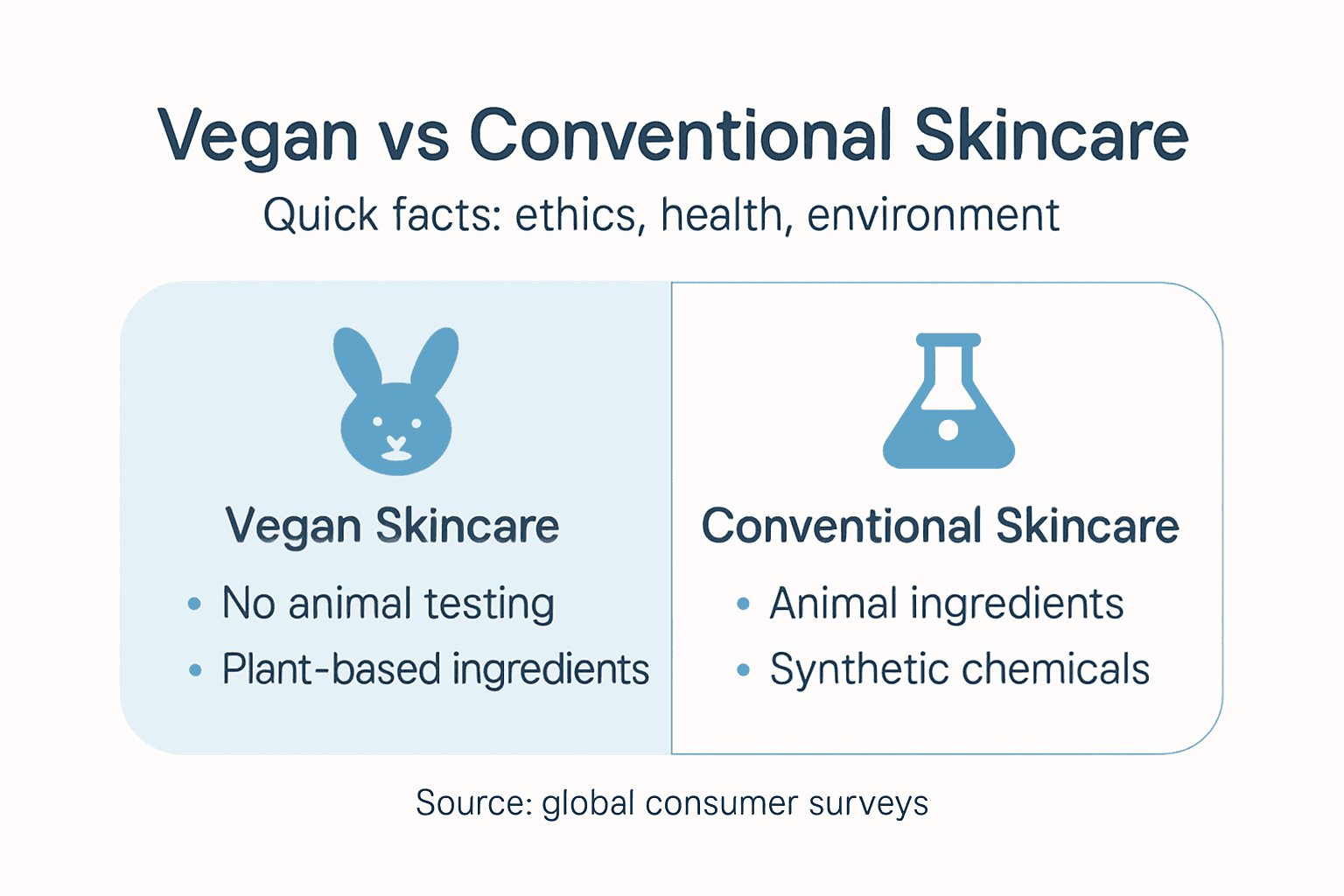
Cruelty-free means no animal testing at any product development stage. Approximately 70% of consumers globally prefer cruelty-free cosmetics to avoid animal testing. This preference reflects growing awareness of cruelty-free skincare benefits and ethical beauty practices.

Vegan skincare reduces demand on animal agriculture, significantly lowering emissions. Animal agriculture accounts for 14.5% of global greenhouse gas emissions. By avoiding animal-derived ingredients, vegan skincare contributes to eco-friendly skincare practices and environmental conservation.
Supporting biodiversity preservation becomes possible when we avoid animal-derived ingredients. Ethical consumerism combines animal welfare with environmental sustainability, creating a comprehensive approach to conscious beauty. Informed choices can reduce your beauty routine’s carbon footprint substantially.
Ethical and environmental benefits:
- No animal testing protects countless animals from suffering
- Reduced greenhouse gas emissions from avoiding animal agriculture
- Lower resource consumption compared to conventional production
- Support for biodiversity and ecosystem preservation
- Alignment with consumer preference for cruelty-free products
- Decreased environmental impact of animal agriculture through purchasing choices
Common Misconceptions About Vegan Skincare
Several widespread myths prevent people from trying vegan skincare. Understanding the facts helps you make confident, informed decisions about your beauty routine.
-
Myth: Vegan skincare is less effective than conventional products. Clinical trials show many vegan formulations equal or outperform conventional products. Effectiveness depends on ingredient quality and formulation science, not the vegan label alone.
-
Myth: All vegan products are all-natural. Many vegan skincare products contain synthetic ingredients that are still plant-derived or laboratory-created without animal sources. Vegan does not automatically mean natural or organic.
-
Myth: Cruelty-free always equals vegan. Cruelty-free products may still include animal-derived ingredients like beeswax, lanolin, or collagen. The terms address different aspects of product ethics.
-
Myth: Vegan skincare cannot address serious skin concerns. Vegan skincare efficacy studies demonstrate comparable results for anti-aging, acne treatment, and other specialized concerns when properly formulated.
Pro Tip: Always read ingredient lists and certification labels carefully rather than relying solely on marketing claims to verify true vegan and cruelty-free status.
Comparing Vegan and Conventional Skincare
Understanding the differences between vegan and conventional skincare helps you evaluate options based on efficacy, ethics, and environmental impact. Clinical data shows comparable or superior results for many vegan formulations.
| Aspect | Vegan Skincare | Conventional Skincare |
|---|---|---|
| Ingredient Source | Plant-based, mineral, synthetic (no animal) | May include lanolin, beeswax, collagen, carmine |
| Allergen Risk | Lower due to avoiding common animal allergens | Higher potential for animal-derived allergen reactions |
| Animal Testing | Never tested on animals | May involve animal testing depending on regulations |
| Environmental Impact | Lower carbon footprint, supports plant agriculture | Higher due to animal agriculture resource demands |
| Clinical Efficacy | Equal or superior in many formulations | Varies by product and formulation quality |
| Ethical Alignment | Supports animal welfare and cruelty-free values | May not align with ethical consumer priorities |
Vegan skincare generally avoids animal allergens and many synthetic chemicals that cause irritation. Conventional products may contain effective ingredients but often rely on skincare ingredient comparison showing higher environmental costs.
Key comparative points:
- Both can be clinically effective with proper formulation
- Vegan options reduce allergen exposure significantly
- Environmental footprint favors plant-based ingredients
- Vegan vs conventional clinical studies support efficacy claims
- Consumers can balance skin benefits with ethical priorities effectively
Vegan Skincare for Sensitive Skin
Sensitive skin benefits especially from vegan formulations due to reduced allergens and gentler ingredients. Plant-based products typically contain fewer harsh chemicals that trigger reactions or inflammation.
Clinical trials show reduced redness and inflammation with vegan skincare. The absence of common animal-derived allergens like lanolin makes vegan products ideal for irritation-prone skin. Plant-based formulations decrease sensitivity while supporting healthy skin barrier function.
Gentle on skin barrier function compared to synthetic conventional products, vegan options provide effective care without compromising protection. Many people with sensitive skin find relief after switching to sensitive skin vegan tips and products.
Pro Tip: Look for hypoallergenic and fragrance-free vegan products if you have highly sensitive skin. These formulations minimize potential irritants while still delivering effective results.
Benefits for sensitive skin:
- Fewer allergens reduce reaction risk dramatically
- Plant-based ingredients soothe inflammation naturally
- Gentler formulations protect skin barrier integrity
- Vegan skincare sensitivity clinical trials confirm reduced irritation
- Lower chemical load prevents long-term sensitivity development
Practical Guide to Choosing Vegan Skincare
Selecting the right vegan skincare requires understanding your needs and verifying product claims. Follow these steps to make informed, effective choices.
-
Identify your skin type first: dry, oily, combination, or sensitive. This determines which plant-based ingredients will work best for your specific concerns.
-
Verify vegan and cruelty-free certifications on packaging. Look for recognized logos from organizations like Leaping Bunny, PETA, or Vegan Society that confirm genuine claims.
-
Research key plant-based ingredients with proven benefits. Ingredients like vitamin C, hyaluronic acid (plant-derived), and plant oils offer targeted results for various skin concerns.
-
Read ingredient lists carefully to avoid hidden animal-derived additives. Common hidden ingredients include cruelty-free ingredients examples that help you recognize what to avoid.
-
Assess brand reputation and ethical sourcing transparency. Companies committed to choosing natural vegan skincare typically provide detailed ingredient information.
-
Tailor choices for specific needs: hydration requires hyaluronic acid and plant oils, anti-aging benefits from antioxidants, sensitivity needs fragrance-free formulations.
Common pitfalls to avoid:
- Confusing vegan with cruelty-free or all-natural labels
- Assuming all plant-based products are equally effective
- Overlooking certification verification
- Neglecting to patch test new products
- Ignoring your specific skin type and concerns
Discover Effective Vegan Skincare Solutions at Passé Daisy
Passé Daisy offers expert-curated vegan skincare collections backed by science and crafted with care. Every product reflects our commitment to cruelty-free, effective formulations that deliver visible results without compromise.
Explore our step-by-step facial care guide for radiant, healthy skin using proven vegan ingredients. Learn more about choosing skincare ingredients naturally to make informed decisions. Discover Passé Daisy vegan skincare that harmonizes luxurious ingredients with thoughtful innovation, supporting your journey to ethical, effective beauty.
Frequently Asked Questions About Vegan Skincare
What certifications prove a product is truly vegan and cruelty-free?
Look for certifications from Leaping Bunny, PETA’s Beauty Without Bunnies, Vegan Society, or Choose Cruelty Free. These organizations verify that products contain no animal-derived ingredients and involve no animal testing at any production stage. Always check for official logos on packaging rather than relying on marketing claims alone.
Can vegan skincare products be effective for aging skin?
Yes, vegan skincare offers powerful anti-aging benefits through plant-based antioxidants, peptides, and vitamins. Ingredients like vitamin C, retinol alternatives from plants, and bakuchiol provide comparable or superior results to conventional anti-aging ingredients. Clinical studies confirm that properly formulated vegan products deliver visible improvements in fine lines, firmness, and skin texture.
Is vegan skincare more expensive than conventional options?
Vegan skincare spans all price points from budget-friendly to luxury. While some premium vegan brands cost more due to high-quality sourcing and certifications, many affordable options exist. Price depends more on ingredient quality and brand positioning than the vegan label itself, making ethical skincare accessible to various budgets.
How do I identify hidden animal-derived ingredients?
Common hidden animal ingredients include lanolin (sheep wool grease), carmine (crushed insects), collagen (animal tissue), and stearic acid (can be animal fat). Check ingredient lists for glycerin source, as it can be animal or plant-derived. Resources from vegan certification organizations provide comprehensive lists of ingredients to avoid when shopping.
Are vegan skincare products suitable for all skin types?
Vegan skincare works for all skin types when properly formulated. Dry skin benefits from plant oils and butters, oily skin from lightweight botanical serums, sensitive skin from gentle plant extracts, and combination skin from balanced formulations. The key is selecting products with appropriate ingredients for your specific concerns rather than avoiding vegan options based on misconceptions.
Recommended
Let customers speak for us
Their packaging is adorable and I’m literally obsessed with their vitamin c moisturizer.
One of my faves! Not too heavy & leaves my skin glowy/bright. The consistency wears perfect under makeup.

Absolutely love this serum! After a few weeks of consistent use, my lashes became longer and fuller, and my brows look much healthier. It’s gentle, easy to apply, and actually delivers visible results. Highly recommend! 💛
Absolutely love this serum! After a few weeks of consistent use, my lashes became longer and fuller, and my brows look much healthier. It’s gentle, easy to apply, and actually delivers visible results. Highly recommend! 💛

I’ve really enjoyed using this serum. It was easy to incorporate into my routine, and my lashes look healthier and fuller. I’m very happy with the results and would recommend it!
I absolutely LOVE this serum! After having a terrible accident with an eyelash curler that ripped out a huge chunk of my lashes, this stuff truly helped grow my lashes back longer and fuller! It is also does not irritate my eyes at all which is a huge plus! Totally worth it!

I’ve been using this serum for a little bit over a week and I have nothing but good things to say. There has been no irritation to my eyelids upon application and after, and I see a change in the fullness of my lashes already. I highly recommend.
I’ve been really enjoying this lash serum! It’s lightweight, easy to apply, and has become such a simple part of my nightly routine. I also love that it doesn’t feel sticky or heavy after application. The packaging is beautiful, and the overall experience feels really luxurious. I’m excited to keep using it and can’t wait to see even more results over time. Definitely recommend if you’re looking to support healthier-looking lashes!
I’ve been really enjoying this lash serum! It’s lightweight, easy to apply, and has become such a simple part of my nightly routine. I also love that it doesn’t feel sticky or heavy after application. The packaging is beautiful, and the overall experience feels really luxurious. I’m excited to keep using it and can’t wait to see even more results over time. Definitely recommend if you’re looking to support healthier-looking lashes!
I am absolutely in love with the Celestial Age-Defy Peptide Serum! Finding an anti-aging product that actually delivers visible results can be a challenge, but this serum is incredible. After just two weeks of using it morning and evening, I can already see a wonderful difference. My skin feels noticeably smoother, firmer, and deeply hydrated. It does an amazing job at softening fine lines and giving the skin a healthy, youthful glow. The texture is lightweight, absorbs beautifully, and leaves the skin feeling great. Highly recommend!

I’ve been using the Multi Peptide Eyelash Serum as part of my routine, and one of the things I like most is that it’s prostaglandin-free, vegan, and cruelty-free. The applicator is very precise, making it easy to apply to both my lashes and brows. So far, I’ve really enjoyed using it and I’m looking forward to seeing my results with continued use. Overall, it’s been a great addition to my beauty routine.
Just started using this serum and I cannot say enough good things about it. It’s so easy to add to my daily routine and really helps extenuate my natural features. Will be purchasing again!! 5 stars easy!!