
Why tailor your skincare routine for radiant skin in 2026
Buying expensive products or stacking multiple serums doesn’t guarantee better skin. Many women follow generic routines that ignore their unique needs, leading to frustration and wasted money. Personalizing your skincare based on your individual skin type, concerns, and lifestyle is the real path to healthier, radiant skin that glows.
Table of Contents
- Understanding Why Skin Is Unique
- How Environment And Lifestyle Affect Skin Needs
- Common Misconceptions About Skincare Personalization
- Scientific Principles Of Choosing Ingredients For Your Skin
- Framework To Build Your Personalized Skincare Routine
- Real-World Success Stories And Practical Tips
- Explore Passé Daisy’s Curated Skincare Solutions
- Frequently Asked Questions
Key takeaways
| Point | Details |
|---|---|
| Skin uniqueness drives routine needs | Sebum production, hydration levels, and barrier function vary significantly between individuals, affecting product performance. |
| Environment impacts skincare | UV exposure, humidity, and pollution alter skin condition and require tailored product choices. |
| Myths hinder effective routines | More products or higher prices don’t guarantee results; customization beats quantity. |
| Science guides ingredient selection | Clinical evidence shows specific actives like niacinamide and salicylic acid work best when matched to skin type and concern. |
| A framework simplifies personalization | Systematic assessment of skin type, concerns, and lifestyle enables confident routine building. |
Understanding why skin is unique
Your skin isn’t the same as your friend’s, your sister’s, or anyone else’s. Sebum production varies widely, with some women experiencing oily shine by noon while others battle constant dryness. Hydration levels and skin barrier function differ too, determining how well your skin holds moisture and defends against irritants.
Sensitivity and reactivity create another layer of uniqueness. Some skin tolerates potent actives without issue, while others redden or sting at the slightest provocation. Identifying personal skin type accurately involves evaluating sebum levels, moisture content, sensitivity responses, and observing reactions to different product types rather than relying on visual guesswork alone.
These biological differences mean a product your coworker loves might wreak havoc on your complexion. Understanding your specific skin characteristics helps you choose products that actually work, reducing irritation and maximizing results. When you know your skin, you stop wasting time and money on formulas that weren’t designed for you.
Key factors defining your unique skin include:
- Sebum output determining oiliness or dryness
- Natural moisture retention capacity affecting hydration
- Barrier integrity influencing sensitivity and protection
- Reactivity patterns revealing tolerance for active ingredients
Getting this foundation right changes everything. Products formulated for oily skin won’t help dry skin, and harsh treatments damage sensitive complexions. Sensitive skin care tips can guide you toward gentler approaches when needed, but first you need clarity on what your skin actually requires.
How environment and lifestyle affect skin needs
Your surroundings constantly reshape your skincare requirements. UV radiation alone increases oxidative stress, damaging skin cells by 70% in high exposure conditions. This accelerates aging and demands protective, reparative ingredients that wouldn’t be priorities for someone living in cloudier climates.

Humidity levels dictate hydration needs dramatically. Dry indoor heating in winter strips moisture, while humid summers can trigger excess oil production. Pollution deposits particulate matter on skin, compromising barrier function and causing inflammation. Your routine must adapt to these shifting environmental pressures or your skin suffers.
Lifestyle factors add complexity. Chronic stress elevates cortisol, triggering breakouts and sensitivity. Poor sleep disrupts skin repair cycles. Diet affects inflammation levels and oil production. Exercise increases sweating and oxidative stress but also boosts circulation.
Environmental and lifestyle factors shaping skincare needs:
- UV exposure requiring antioxidants and sun protection
- Humidity levels affecting moisturizer weight and formulation
- Pollution demanding deeper cleansing and barrier support
- Stress levels influencing inflammation and breakouts
- Sleep quality impacting skin regeneration
- Dietary patterns altering sebum composition
A woman commuting in polluted city air needs different products than someone working from a rural home. Someone training for marathons requires hydration support beyond what a sedentary lifestyle demands. Seasonal skincare routines become essential when you recognize how dramatically your environment shifts throughout the year.
Environmental factors such as humidity, UV exposure, and pollution significantly influence skin condition and determine targeted skincare needs, requiring adaptive routines rather than static product lists.
Ignoring these external influences means fighting a losing battle. Your routine must flex with your life, not remain frozen in outdated assumptions about what worked last year or in different circumstances.
Common misconceptions about skincare personalization
The beauty industry profits from convincing you that more is better. Shelves overflow with 10-step routines and luxury price tags promising miracles. Yet using multiple products doesn’t guarantee better outcomes, and expensive brands aren’t inherently more effective than affordable alternatives.
Many people falsely believe that using more products or higher-end brands automatically results in better skin health, which is contradicted by evidence that routine customization drives efficacy, not product quantity or price. This misconception keeps women buying unnecessary products while their actual skin concerns go unaddressed.
Generic one-size-fits-all routines often worsen problems. A routine designed for normal skin can strip dry skin or fail to control oily skin. Acne treatments marketed to everyone might inflame sensitive complexions. The myth that everyone needs the same basic steps ignores biological reality.
Wide-spread skincare myths blocking effective personalization:
- More products equal better skin (reality: excess products cause irritation)
- Higher prices mean superior results (reality: ingredient match matters most)
- Everyone needs the same core routine (reality: skin varies dramatically)
- Natural always beats synthetic (reality: both can be effective or harmful)
- Quick fixes exist for skin concerns (reality: consistent customization works)
Simplifying and tailoring your routine based on actual needs leads to better skin health. Consistency matters more than actives when you’ve chosen the right basic approach for your skin type. Three targeted products used consistently outperform ten random products applied sporadically.
The real path forward requires rejecting marketing hype and focusing on what your specific skin needs. That might be fewer products, cheaper options, or completely different ingredients than influencers recommend. Personalization means making choices based on your skin, not trends.
Scientific principles of choosing ingredients for your skin
Evidence-based ingredient selection transforms skincare from guesswork into strategy. Different actives target specific concerns with measurable results. Understanding which ingredients match your needs prevents wasting money on ineffective formulas.
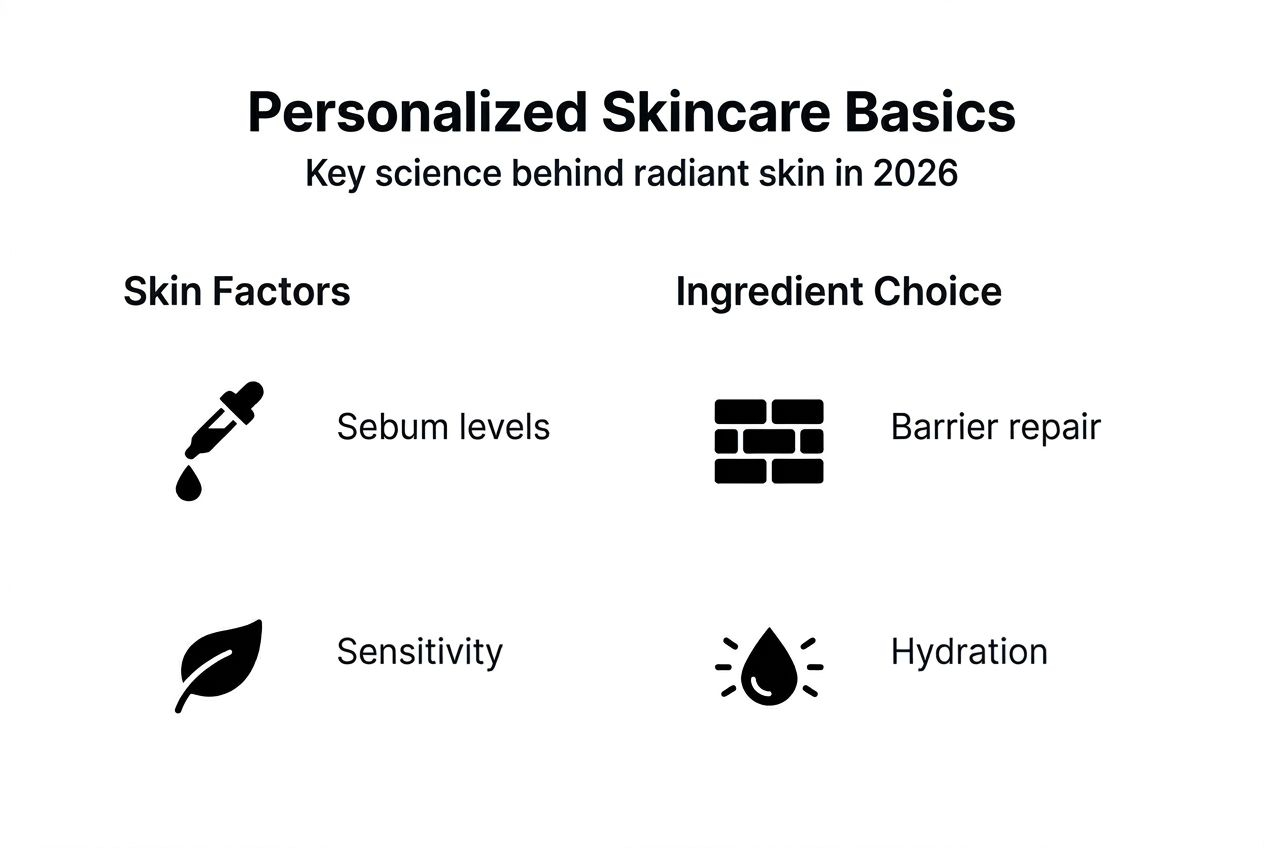
Niacinamide supports barrier repair, reduces inflammation, and regulates sebum production. It works across skin types, making it a versatile choice. Salicylic acid targets acne effectively by penetrating pores and dissolving oil buildup, but it’s too harsh for very dry or sensitive skin. Hyaluronic acid attracts moisture regardless of skin type, though application method matters.
Clinical trials validate ingredient efficacy and safety, separating proven actives from marketing claims. Retinoids accelerate cell turnover and reduce wrinkles, backed by decades of research. Vitamin C brightens and protects against oxidative damage when formulated correctly. Ceramides restore barrier function in compromised skin.
Choosing ingredients scientifically:
- Identify your primary skin concern (acne, aging, dryness, sensitivity)
- Research which actives address that concern with clinical support
- Consider your skin type’s tolerance for potent ingredients
- Check formulation stability and concentration levels
- Start with one active at a time to monitor results
- Adjust based on skin response rather than marketing claims
Matching ingredients to concerns requires understanding mechanisms. Choosing skincare ingredients naturally explores gentle options, while synthetic actives often deliver faster results. Both approaches work when matched to your specific situation.
Niacinamide boosts skin barrier function significantly for many women, making it a smart personalization choice. Understanding active ingredients in skincare helps you decode product labels and make informed decisions about what belongs in your routine.
The key is choosing ingredients that solve your actual problems rather than following trends. Your dry, sensitive skin doesn’t need the same powerful retinoid that works for someone with oily, resilient skin fighting deep wrinkles.
Framework to build your personalized skincare routine
Systematic assessment removes guesswork from routine building. Start by objectively evaluating your skin type using sebum levels, moisture content, and sensitivity responses. Objective measurements improve accuracy by over 40% compared to self-assessment alone, so consider professional analysis or at-home testing tools.
Next, prioritize your skin concerns based on severity and daily impact. Persistent acne might take precedence over fine lines. Chronic dryness causing discomfort needs addressing before subtle texture issues. Ranking concerns helps you allocate ingredient choices effectively.
Building your personalized routine step by step:
- Assess skin type objectively through sebum, moisture, and sensitivity testing
- List concerns in priority order based on severity and impact
- Evaluate environmental exposures (UV, pollution, climate)
- Consider lifestyle factors (stress, sleep, diet, exercise)
- Select clinically proven ingredients matching your profile
- Build a minimal routine with cleanser, treatment, and moisturizer
- Monitor skin response weekly and adjust as needed
Environmental and lifestyle factors inform product choices. If you face harsh winters, heavier moisturizers become essential. High pollution areas demand thorough cleansing. Stressful periods might require calming ingredients over potent actives.
| Skin Type | Primary Concerns | Recommended Ingredients | Routine Emphasis |
|---|---|---|---|
| Oily | Acne, enlarged pores | Salicylic acid, niacinamide | Lightweight hydration, oil control |
| Dry | Flaking, tightness | Hyaluronic acid, ceramides | Rich moisturization, barrier repair |
| Sensitive | Redness, reactivity | Centella, panthenol | Gentle formulas, minimal actives |
| Combination | Mixed concerns | Niacinamide, gentle acids | Targeted application, balanced hydration |
Step by step facial care guides walk you through application order and timing. The cruelty-free skincare workflow shows how ethical choices integrate into personalized routines. An ethical skincare workflow can maintain effectiveness while respecting your values.
Pro Tip: Introduce new products one at a time, waiting two weeks between additions. This lets you identify exactly which product causes any reaction and which delivers results.
Start simple and build complexity only when needed. Three well-chosen products beat ten random ones. Monitor your skin’s response honestly, adjusting when something isn’t working rather than persisting out of habit.
Real-world success stories and practical tips
Personalized routines deliver measurable improvements. Women who switched from generic to personalized skincare reported visible reductions in redness, improved hydration, and reduced acne within 4 to 12 weeks. One case study showed redness decreasing by 35% when barrier-supporting ingredients replaced harsh treatments.
Hydration improvements reached 40% in women who matched moisturizer weight to their skin type instead of using whatever was popular. Acne severity often decreased within weeks when targeted actives replaced generic anti-acne products that didn’t address individual triggers.
These successes share common patterns. Women who tracked their skin’s response weekly adjusted faster than those who waited months. Starting with minimal routines and adding strategically beat complicated 10-step approaches. Patience with one product outperformed constantly switching based on reviews.
Practical tips for personalization success:
- Introduce products gradually, one every two weeks minimum
- Patch test new ingredients on your jawline before full application
- Keep a simple skin journal noting changes and product additions
- Adjust your routine seasonally as environment shifts
- Prioritize consistency over perfection in application
- Listen to your skin’s feedback rather than marketing hype
Pro Tip: Take weekly photos in consistent lighting to track progress objectively. Your eyes adjust to gradual changes, but photos reveal improvements you might otherwise miss.
Types of skincare ingredients become easier to navigate when you understand what your skin actually needs. Knowledge transforms overwhelming options into clear choices. The woman who reduced her routine from nine products to four saw better results because those four targeted her actual concerns.
Success requires patience and observation. Your skin didn’t develop its current state overnight, and transformation takes consistent effort. Most women see initial improvements within four weeks, with significant changes by twelve weeks when routines truly match their needs.
Explore Passé Daisy’s curated skincare solutions
Personalizing your routine becomes easier with products designed for targeted results. Passé Daisy offers meticulously crafted formulas that address specific skin needs while maintaining cruelty-free, ethical standards. Each product harmonizes effective ingredients with elegant textures.
The Feels Like Silk Peptide Moisturizer delivers barrier support and hydration for women seeking radiant, healthy skin. Après Skin Milk provides lightweight moisture ideal for combination or oily skin types. The Peptide Eye Cream targets delicate eye area concerns with precision.
These formulas reflect years of hands-on skincare testing expertise, ensuring every ingredient serves a purpose. Choosing products designed with personalization in mind complements your tailored routine, helping you achieve the visible results you deserve while supporting conscious beauty values.
Frequently asked questions
What is a tailored skincare routine?
A tailored skincare routine matches products and ingredients to your specific skin type, concerns, environment, and lifestyle. Instead of following generic advice, you choose formulas based on your unique sebum production, sensitivity, and goals, leading to better results with fewer products.
How do I find my skin type accurately?
Objective assessment beats guesswork by measuring sebum levels, moisture content, and sensitivity responses. Professional analysis or at-home testing tools improve accuracy significantly. Observe how your skin behaves throughout the day and reacts to different products over several weeks.
Can a personalized routine help sensitive skin?
Absolutely. Personalization for sensitive skin means choosing gentle, calming ingredients like centella and panthenol while avoiding harsh actives. By eliminating unnecessary products and focusing on barrier support, sensitive skin often improves dramatically within weeks.
Why is less sometimes more in skincare?
Using fewer, well-chosen products reduces irritation risk and makes it easier to identify what works. Three targeted products addressing your actual concerns outperform ten random products applied without strategy. Simplicity also improves consistency.
How long to see results with personalized skincare?
Most women notice initial improvements within four weeks of switching to personalized routines. Significant changes typically appear by twelve weeks with consistent application. Patience matters because skin cell turnover and barrier repair take time, but results compound when you stick with what works.
Recommended
Let customers speak for us
Their packaging is adorable and I’m literally obsessed with their vitamin c moisturizer.
One of my faves! Not too heavy & leaves my skin glowy/bright. The consistency wears perfect under makeup.

Absolutely love this serum! After a few weeks of consistent use, my lashes became longer and fuller, and my brows look much healthier. It’s gentle, easy to apply, and actually delivers visible results. Highly recommend! 💛
Absolutely love this serum! After a few weeks of consistent use, my lashes became longer and fuller, and my brows look much healthier. It’s gentle, easy to apply, and actually delivers visible results. Highly recommend! 💛

I’ve really enjoyed using this serum. It was easy to incorporate into my routine, and my lashes look healthier and fuller. I’m very happy with the results and would recommend it!
I absolutely LOVE this serum! After having a terrible accident with an eyelash curler that ripped out a huge chunk of my lashes, this stuff truly helped grow my lashes back longer and fuller! It is also does not irritate my eyes at all which is a huge plus! Totally worth it!

I’ve been using this serum for a little bit over a week and I have nothing but good things to say. There has been no irritation to my eyelids upon application and after, and I see a change in the fullness of my lashes already. I highly recommend.
I’ve been really enjoying this lash serum! It’s lightweight, easy to apply, and has become such a simple part of my nightly routine. I also love that it doesn’t feel sticky or heavy after application. The packaging is beautiful, and the overall experience feels really luxurious. I’m excited to keep using it and can’t wait to see even more results over time. Definitely recommend if you’re looking to support healthier-looking lashes!
I’ve been really enjoying this lash serum! It’s lightweight, easy to apply, and has become such a simple part of my nightly routine. I also love that it doesn’t feel sticky or heavy after application. The packaging is beautiful, and the overall experience feels really luxurious. I’m excited to keep using it and can’t wait to see even more results over time. Definitely recommend if you’re looking to support healthier-looking lashes!
I am absolutely in love with the Celestial Age-Defy Peptide Serum! Finding an anti-aging product that actually delivers visible results can be a challenge, but this serum is incredible. After just two weeks of using it morning and evening, I can already see a wonderful difference. My skin feels noticeably smoother, firmer, and deeply hydrated. It does an amazing job at softening fine lines and giving the skin a healthy, youthful glow. The texture is lightweight, absorbs beautifully, and leaves the skin feeling great. Highly recommend!

I’ve been using the Multi Peptide Eyelash Serum as part of my routine, and one of the things I like most is that it’s prostaglandin-free, vegan, and cruelty-free. The applicator is very precise, making it easy to apply to both my lashes and brows. So far, I’ve really enjoyed using it and I’m looking forward to seeing my results with continued use. Overall, it’s been a great addition to my beauty routine.
Just started using this serum and I cannot say enough good things about it. It’s so easy to add to my daily routine and really helps extenuate my natural features. Will be purchasing again!! 5 stars easy!!